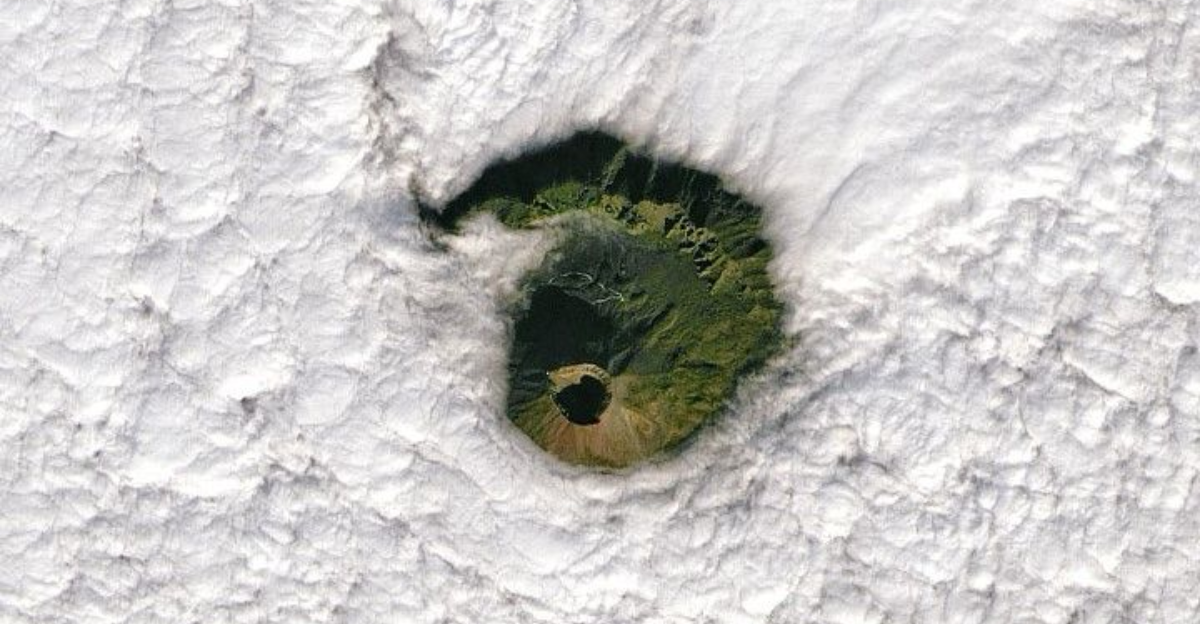
Mount Vesuvius, the infamous volcano responsible for the destruction of Pompeii in 79 AD, has once again captured attention—this time from space. Satellite images have given us a glimpse into the “ticking time bomb” sitting near one of Europe’s most densely populated areas.
What Makes This Volcano So Famous?

Its eruption in AD 79 buried the Roman cities of Pompeii and Herculaneum under layers of ash and pumice, preserving an eerie snapshot of ancient life frozen in time. The tragedy turned Vesuvius into a symbol of nature’s destructive power, inspiring countless books, films, and scientific studies. Unlike many other volcanoes, Vesuvius sits dangerously close to a major modern city, making it a constant subject of fascination and concern.
A Volcano Under Surveillance

Mount Vesuvius is one of the volcanoes under constant surveillance, as scientists watch its every tremor. Satellites orbiting Earth capture high-resolution images, monitoring subtle shifts in the landscape that could signal impending activity. On the ground, a network of sensors measures seismic movements, gas emissions, and temperature changes, ensuring no sign of unrest goes unnoticed. Despite its quiet facade, Vesuvius remains a ticking time bomb, with millions living in its shadow.
The Peek-A-Boo Effect

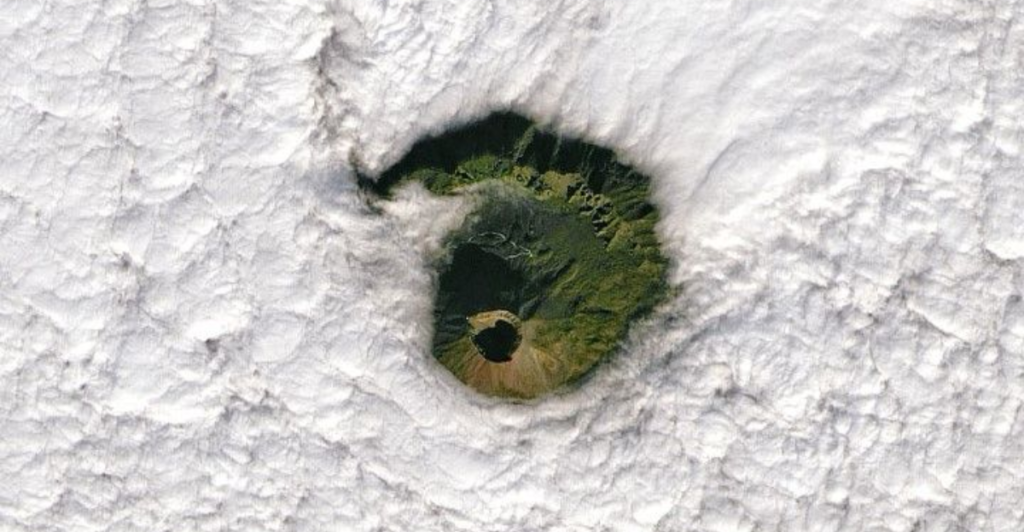
From space, Mount Vesuvius is playing an eerie game of peek-a-boo, momentarily revealing itself before vanishing behind a swirling veil of clouds. One instant, its crater is in full view, offering scientists a glimpse into its restless heart; the next, thick clouds roll in, obscuring the site like nature’s disappearing act.
What Can Satellite Images Reveal

High-resolution thermal imaging detects temperature shifts, potentially signaling rising magma, while radar scans monitor even the slightest ground deformation—an early warning sign of volcanic unrest. Scientists also analyze gas emissions from space, using specialized sensors to track the release of sulfur dioxide and other volcanic gases that often precede an eruption.
Why Is Vesuvius A Ticking Time Bomb?

History has proven that its quiet periods are the calm before the inevitable storm. Millions live within its potential blast zone, and while it has remained mostly dormant since its last eruption in 1944, scientists warn that pressure is slowly building beneath the surface. Seismic activity, gas emissions, and ground deformation indicate that Vesuvius isn’t extinct—it is merely biding its time.
Comparing Past And Present Data

Historical records give us a chilling reminder of the volcano’s potential. At the same time, modern satellite and ground-based sensors track even the subtlest changes in seismic activity, gas emissions, and ground deformation. By overlaying past eruption data with real-time satellite imagery and thermal readings, researchers can detect volcano behavior shifts that might otherwise go unnoticed. This high-tech time travel—merging ancient accounts with cutting-edge surveillance—helps scientists refine eruption models and improve early-warning systems, ensuring that when Vesuvius awakens again, humanity won’t be caught off guard like it was centuries ago.
The People At Risk When Vesuvius Decides To Blow

The volcano looms over Naples’s densely populated metropolitan area, home to around three million people, with nearly 700,000 living in the officially designated “red zone”—the area most vulnerable to pyroclastic flows, ashfall, and lava. Narrow streets, high population density, and limited escape routes mean that chaos could ensue even with a timely warning. The Italian government has an emergency evacuation plan, but the unpredictability of Vesuvius’ next eruption keeps scientists and residents on edge.
Could Vesuvius Erupt Again Soon?

The question isn’t if Mount Vesuvius will erupt again, but when—and possibly how soon. Rising gas emissions, minor tremors, and ground deformation suggest that magma is still active beneath the surface, slowly building pressure. Vesuvius is known for its sudden and violent eruptions, meaning there might not be much warning before the next big event. Experts believe an eruption in the coming decades is a real possibility, though the exact timing remains uncertain.
The Evacuation Plans For The People Nearby

The plan includes designated evacuation routes, temporary shelters, and mass transportation efforts to relocate people to safer regions. A delayed response or miscalculated predictions could spell disaster, as history has shown Vesuvius erupts with little warning. While technology and planning have advanced, the real test will come when the volcano finally decides to wake up.
The Last Eruption – 1944

As World War II raged across Europe, the volcano unleashed a fiery assault of its own, sending lava flows cascading down its slopes, belching thick clouds of ash, and hurling red-hot debris into the sky. Several villages were destroyed, thousands were left homeless, and even Allied troops stationed nearby had to evacuate as the eruption unfolded. While it has remained dormant for over 80 years, scientists know this slumber won’t last forever.
Don’t Underestimate The Silence

Mount Vesuvius may be quiet for now, but history and science both warn that this silence is temporary. The millions living in its shadow remain at risk, and while evacuation plans exist, Vesuvius’s unpredictability means there may not be much time to react when it finally erupts again. Whether seen from space or studied on the ground, one fact remains clear—Vesuvius is a ticking time bomb.
References:
Earth from space: Italy’s ‘ticking time bomb’ plays peek-a-boo through a mysterious hole in the clouds
Amazing Satellite Image Shows Mount Vesuvius Peeking Through the Clouds
‘Nature’s ticking time bomb’: Italy’s most ‘dangerous volcano’ peers through a mysterious cloud hole from space